Mastering Your HKDSE Final Months: Strategies That Actually Work
Why the final months feel harder than they should
The air in the house changes about three months out from the HKDSE. Parents stop asking about weekend plans and start asking about mock exam percentages. Students find themselves staring at a pile of past papers, wondering if they’ve actually learned anything or if they’ve just been memorizing mark schemes by osmosis. It is a period defined by a specific kind of claustrophobia, where every hour spent sleeping or eating feels like time stolen from the library.
This intensity is exacerbated by the global context of our students. Whether it is the instability of international student visas mentioned in recent reports from Singapore or the struggles schools face in maintaining basic facilities, the pressure to 'succeed' is heavier than ever. You are not just preparing for an exam; you are navigating a landscape where the stakes feel increasingly permanent. It is completely normal to feel like the ground is shifting beneath you when news headlines remind us daily of how fragile educational security can be.
What students should actually do this week
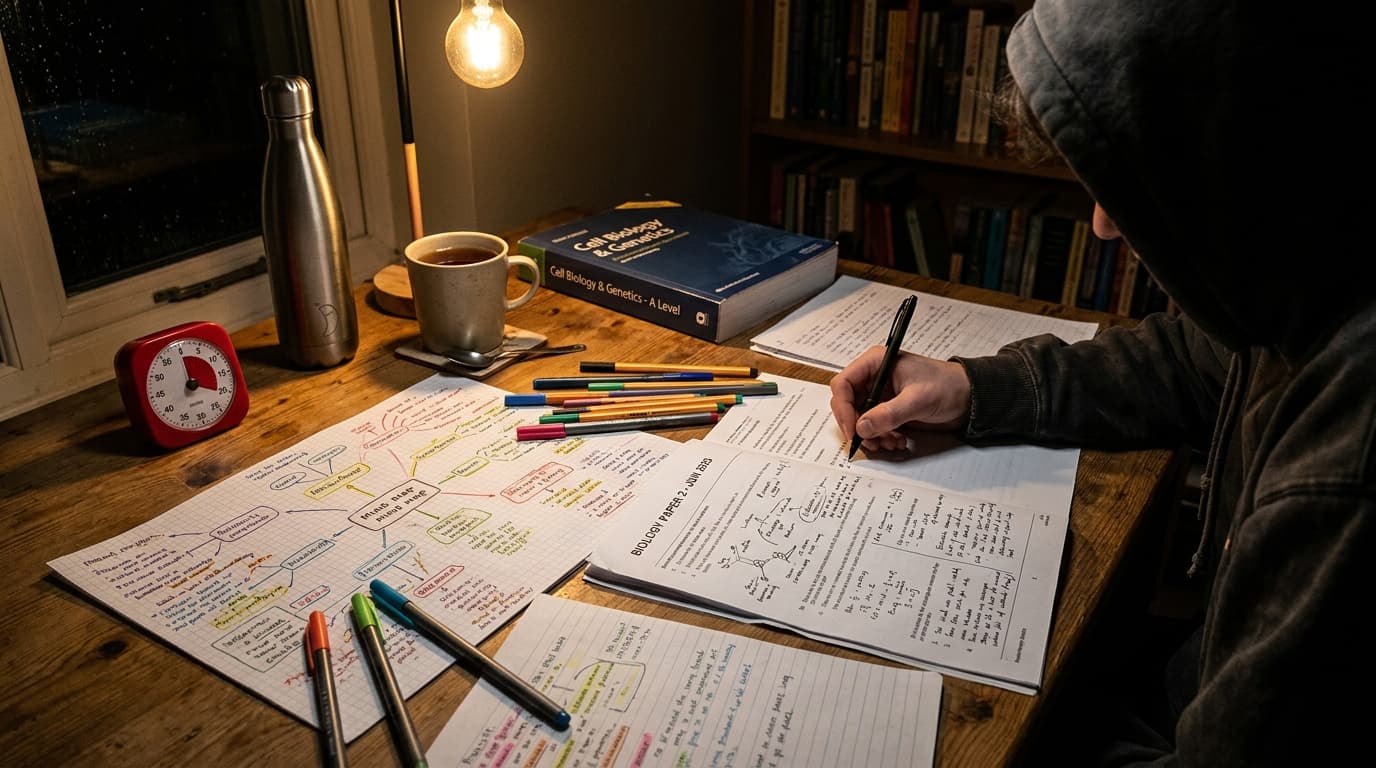
Stop reading your textbooks from cover to cover. It is a passive activity that feels like work but yields very little retention. Instead, pick one specific topic—say, organic chemistry or macroeconomics—and attempt a single, timed 20-minute past paper question. Do not look at the mark scheme yet. Struggle with it. The moment you realize you have forgotten a specific reaction mechanism or a definition is the moment your brain finally starts to pay attention.
After you finish, grade yourself with brutal honesty. If you cannot explain the logic behind a mark, you do not know the material. This is where your revision shifts from 'looking at notes' to 'active recall.' Spend your week building a list of these 'gap topics.' If you fix one or two of these every day, you will find that by the time the actual exam arrives, your confidence is built on a foundation of proven capability rather than hopeful guesswork.
How parents can support without adding to the noise
Parents often think their role is to police the desk time. You might feel tempted to hover, checking if the phone is tucked away or if the light is bright enough. But as recent reports on the intersection of technology and student well-being suggest, the constant negotiation over screen time is often a distraction from the real issue: quality of engagement. Instead of tracking hours, ask about the 'process'—ask what was the hardest concept they encountered today, rather than how many hours they sat in the chair.
Your child is likely already suffering from a sense of overload. When they come out of their room, they don't need a summary of the latest news on education funding or university admission policies. They need a predictable environment. Keep the house quiet, ensure there is food that doesn't require complex preparation, and resist the urge to turn every conversation into an assessment of their progress. Being a calm anchor is more valuable than being a secondary tutor.
Common revision myths that drain your energy
The biggest myth in the HKDSE cycle is the 'all-nighter' approach. There is a persistent belief that sacrificing sleep is the only way to demonstrate commitment. In reality, the cognitive decline associated with sleep deprivation makes your revision sessions twice as long and half as effective. You are effectively paying for your study time with a currency you don't have: your long-term memory capacity.
Another trap is the 'perfect notes' syndrome. Spending four hours color-coding your summaries or re-writing definitions in neat calligraphy is not studying—it is art class. If your notes are already legible, stop re-writing them. Spend that time doing practice problems. If you have to choose between a pretty summary and a messy, corrected practice paper, choose the messy paper every single time. It is the mess that proves you are actually learning.
Finding your rhythm in the final stretch
The goal of these final months isn't to know everything perfectly; it's to know how to navigate the exam paper under pressure. If you can manage your energy and focus on the gaps in your knowledge, you will outperform the students who spend their time panicking or procrastinating through perfectionism. Tools like Revui help by automating that identification of weak spots, letting you focus your limited time on what actually needs fixing.
Take a breath. The headlines might be chaotic and the world might feel uncertain, but your exam performance is something you can control through disciplined, incremental action. Keep your head down, focus on the next question, and trust that the consistency of your effort will pay off.