Why Timed Practice is the Best Antidote to Exam Anxiety
The Silent Panic of the Clock
It’s 6:00 PM on a Tuesday. You’re staring at a physics past paper, your phone is pinging with notifications, and you feel that familiar tightening in your chest. Whether you are prepping for the HKDSE or your upcoming A-Levels, the pressure is real and, frankly, exhausting. Recent reports from the UK about the growing tension over graded school inspections reflect the climate many of you are currently breathing—an environment where one snapshot of performance feels like a total definition of your future.
We often treat revision like a marathon of reading. We highlight, we re-read, and we make pretty mind maps. But then we walk into the exam hall, the clock starts, and suddenly, the knowledge evaporates. This isn't a lack of intelligence; it’s a lack of practice in the actual environment you'll be tested in. Anxiety flourishes in the unknown. When you haven't faced the pressure of a ticking clock at home, the exam hall becomes a place of genuine terror rather than just a challenge to be met.
Finding Calm Amid Global Classroom Chaos
It feels like the world is constantly throwing new stressors our way. From the health concerns raised by clinicians regarding excessive screen time in English schools, to the massive student protests in France over educational reform, the path to graduation feels increasingly volatile. Parents are rightfully worried about the impact of these disruptions on their children’s mental health, and teachers are navigating a landscape where the stakes for every assessment feel higher than ever.
When your external environment is unpredictable, your internal study routine must be your anchor. Using timed practice is not just about checking if you know the content; it’s about 'desensitization.' By subjecting yourself to a controlled, timed environment, you reduce the novelty of the pressure. When you finally sit for the real paper, your brain recognizes the rhythm of the exam as something you have already mastered, not as a source of incoming threat.
How to Run a Professional Mock at Home
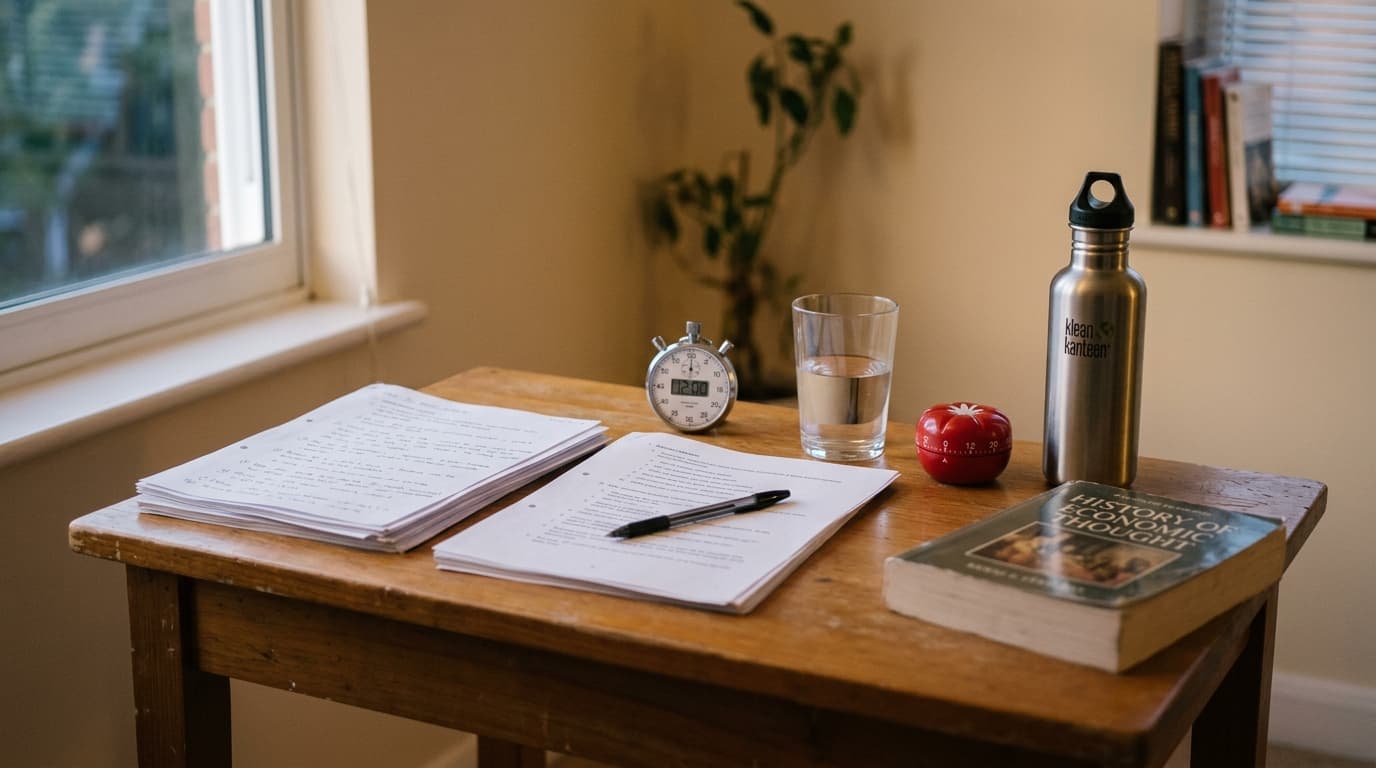
If you want to reduce anxiety, stop doing 'casual' revision. Pick a specific topic or a full section of a past paper. Clear your desk of everything except what is allowed in the exam—no phone, no browser tabs, no music. Set a timer for 75% of the allotted time for that section. If the exam gives you 60 minutes, give yourself 45. This builds a buffer of 'cognitive speed' that makes the real exam feel luxurious by comparison.
The goal here is to fail safely. If you run out of time, stop writing immediately. Don't finish the sentence. That 'failure' is the most valuable data point you will get all week. It shows you exactly where your process breaks down. Is it the calculation? Is it the essay planning? By isolating these moments of panic during a practice session, you transform them from terrifying surprises into manageable problems you can solve before the actual test date.
Supporting Students Without Adding Pressure
For parents and teachers, the hardest part is watching a student struggle without jumping in to 'fix' it. If your child is revising, don't ask if they are 'working hard.' Ask if they have 'timed themselves' lately. Create a home environment that respects the 90-minute block. If the kitchen table is too noisy, help them find a space where they can replicate the silence of an exam hall. Avoid the temptation to monitor their screen time obsessively, as research suggests the 'policing' of devices often creates more tension than the devices themselves.
Teachers can help by normalizing the 'failed' mock. Encourage your students to share their worst practice results, not their best ones. When a student sees that even the top-performing peer struggles to finish a paper on time, the stigma of being 'too slow' or 'too anxious' disappears. Remind them that exams are not a measure of their worth, but a technical skill—like a sport—that requires training under match conditions.
Common Pitfalls of the 'Good Student'
The biggest myth in revision is that you must be 'ready' before you take a timed test. Many students put off practice until they have finished every single page of their textbook. This is a trap. You will never feel 100% ready. If you wait until you know everything to test yourself, you are ignoring the reality that exams aren't just tests of knowledge; they are tests of retrieval speed.
Another common mistake is the 'post-game' avoidance. Students often look at their score and then throw the paper away. That is a wasted opportunity. The anxiety comes from not knowing what you don't know. Spend double the time marking the paper as you did writing it. Understand why you lost that mark. Was it a lack of knowledge, or was it because the clock was ticking and you rushed the logic? Knowing the difference is how you reclaim your confidence.
Turning Anxiety into Execution
By integrating disciplined, timed practice into your weekly routine, you move from passive memorization to active performance, and tools like Revui can help you manage these sessions and identify exactly where your timing lags behind the requirement.
Further reading
- Cut screen time in classrooms to avoid long-term health issues, clinicians urge — BBC Education
- Ofsted faces fresh calls to halt graded school inspections in England — BBC Education
- France’s class action: inside the 16 October Guardian Weekly — The Guardian Education
- ‘Clean air is not a favour’: Indonesia’s neighbours fed up with acrid haze as Singapore threatens to prosecute — The Guardian Asia-Pacific
- Report About FSA’s Future Causes Concern — Inside Higher Ed